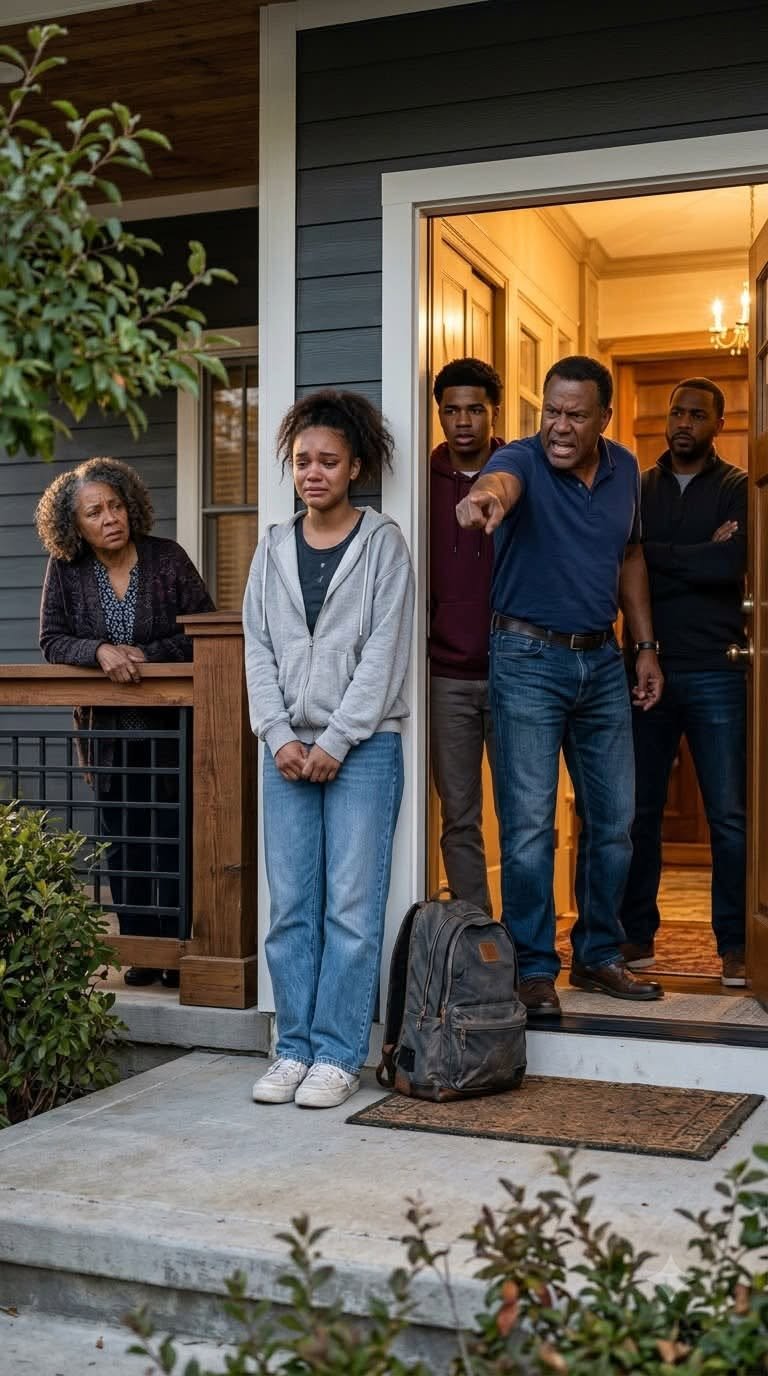
My Parents Kicked Me Out at 17—Nine Years Later, They Begged Me for $400,000, Until I Turned My Laptop Around
“GET OUT! YOU’RE NOTHING WITHOUT US!”
My father screamed those words as he threw my backpack onto the front porch.
I was only seventeen.
My mother stood behind him, watching silently.
My younger brother laughed through the living room window.
Then our seventy-one-year-old neighbor stepped outside and whispered five words that changed my entire life.
“You can stay with me.”
I burst into tears.
Nine years later, those same parents appeared at my office, desperately asking for $400,000.
My father was smiling confidently.
He believed I would hand over the money without questioning him.
But when I turned my laptop toward him, the smile disappeared.
His face went completely pale.
My name is **Olivia Brooks**, and nine years ago, I was a frightened teenager standing outside my childhood home with one backpack and nowhere to spend the night.
My father, **Harold Brooks**, had just slammed the door in my face.
“Get out! You’re seventeen now, and we’re done wasting money on you!”
I stood frozen on the porch.
Tears rolled down my cheeks.
I had no savings.
No car.
And no relatives I could call without my parents finding out.
My parents had never seemed to want a daughter.
They wanted someone who would obey orders, cook dinner, clean the house, and never question their decisions.
My younger brother, **Jason**, received everything.
A brand-new car for his sixteenth birthday.
Designer clothes.
Private tutors.
Expensive vacations.
I received secondhand textbooks and constant lectures about being grateful.
When Jason failed a class, my parents blamed his teachers.
When I earned straight A’s, they asked why I hadn’t done the dishes.
I learned early that nothing I accomplished would ever be enough.
The final argument began when I received a full academic scholarship to a prestigious engineering university in the fictional American state of Westhaven.
For the first time, I believed I had a chance to escape.
Tuition would be covered.
I could live on campus.
And I could finally study something I loved.
But my father had different plans.
“You’re staying here and helping with the family business,” Harold announced.
I stared at him.
“But Dad, it’s a full scholarship.”
“I don’t care.”
My mother, **Denise**, nodded.
“Jason needs your help more than you need college.”
My brother was sixteen.
He had no interest in our family’s construction supply business beyond the money it provided.
But my parents believed his future mattered more than mine.
For years, I’d helped organize invoices, answer customer calls, and manage inventory without receiving a paycheck.
My father called it family responsibility.
I called it working every afternoon while my brother played video games.
“I want to become an engineer,” I said.
Harold’s expression darkened.
“You’ll do what you’re told.”
For the first time in my life, I refused.
“No, Dad.”
The room became silent.
He stared at me.
“What did you say?”
“I earned that scholarship. I’m going.”
My mother’s face tightened.
“Olivia, stop being selfish.”
But I didn’t take it back.
The following evening, Harold packed my clothes into an old backpack.
Then he threw it onto the porch.
“YOU’RE NOTHING WITHOUT US!”
The front door slammed.
My mother watched without speaking.
Jason laughed through the window.
I stood outside for twenty minutes, trembling.
I didn’t know where I would sleep.
I didn’t know what I would eat.
And despite everything my parents had done, some terrible part of me still wondered whether I should knock and apologize.
Then the door of the small white house next door opened.
Our seventy-one-year-old neighbor, **Mrs. Evelyn Parker**, stepped outside.
She was a widow with silver-gray hair, gentle eyes, and a habit of leaving homemade cookies on our doorstep.
I’d known her for years.
But I had never imagined she would become the most important person in my life.
She walked toward me.
Looked at the backpack.
Then looked at the tears streaming down my face.
“You can stay with me,” she said.
I started crying harder.
“I don’t have any money.”
She gently took my backpack.
“Sweetheart, I didn’t ask.”
She brought me into her warm kitchen.
Made hot chocolate.
Placed a blanket around my shoulders.
And let me cry without demanding an explanation.
Then she called a trusted family attorney and the appropriate local authorities to arrange safe temporary care because I was still seventeen.
With professional help, the necessary legal arrangements were made for me to remain safely in her care.
For the first time in my entire childhood, an adult asked what I wanted for my future.
I looked at Mrs. Parker.
Then whispered one word.
“Engineering.”
She smiled.