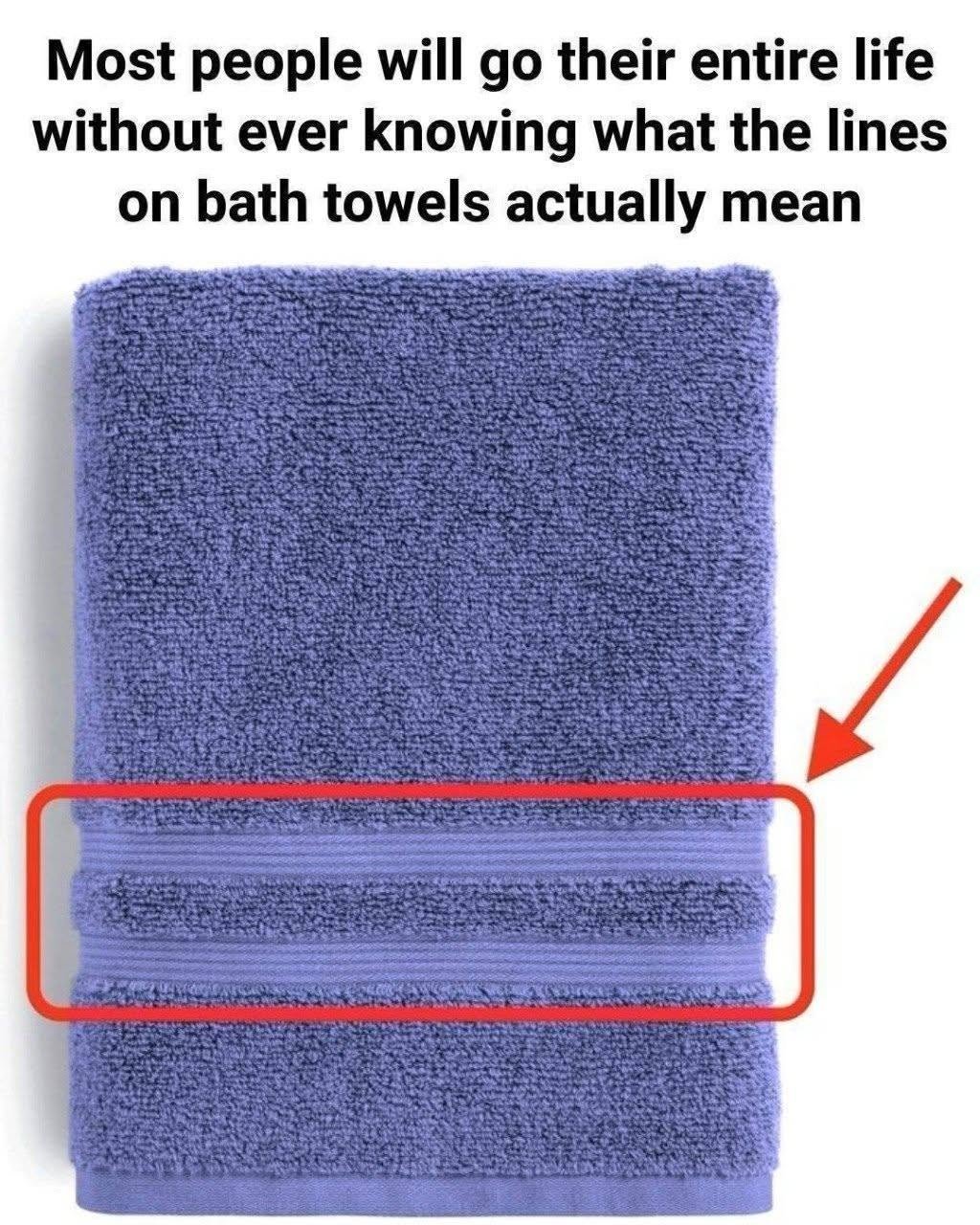
Why Do Bath Towels Have Lines? The Practical Design Detail Most People Miss
Have you ever unfolded a bath towel and wondered about those raised lines running across it?
They may look like decoration, but those stripes—often called dobby borders, dobby bands, or decorative woven bands—serve several practical purposes.
And there’s a good reason you see them on so many towels.
1. They Help Keep the Towel From Losing Its Shape
A bath towel is made from thousands of loops of woven fabric.
Those loops create the soft, absorbent surface we associate with towels, but the edges and certain sections of the towel need additional structure.
The woven bands provide a tighter, more stable section of fabric that can help reinforce the towel and reduce distortion around the edges.
In other words, those lines aren’t simply there to make the towel look fancy.
They’re part of the towel’s construction.
2. They Make the Towel Easier to Weave
The decorative band is created by changing the weaving pattern.
Instead of continuing the same looped texture across the entire towel, manufacturers create a section with a different weave.
This produces the familiar stripe or geometric pattern.
It also gives the towel a clearly defined border.
That makes the manufacturing process more controlled and helps create a consistent finished product.
3. They Give the Towel a Finished Look
There’s also an aesthetic reason.
Without a border, a large bath towel would essentially look like one giant rectangle of terry fabric.
The woven bands break up that surface and give the towel a more finished appearance.
That’s why hotels often use towels with prominent decorative borders—they make simple white towels look more polished and uniform.
4. They’re Usually Less Absorbent Than the Rest of the Towel
Here’s something you may notice when drying yourself:
The striped section doesn’t feel as fluffy as the rest of the towel.
That’s intentional.
The main body of a terry towel contains loops that increase surface area and help absorb water.
The decorative band uses a flatter, tighter weave, so it generally doesn’t absorb water as effectively as the looped portion.
That’s why the middle of the towel is usually the best place to dry yourself.
5. They Can Help With Folding
Those horizontal bands can also serve as convenient visual markers.
When folding towels, the lines give you an easy reference for where to make a fold.
This is particularly useful in hotels, laundries, and households where towels are folded into consistent shapes.
It’s a small detail, but it helps create that neat, uniform stack you see on hotel shelves.
6. Not Every “Line” Has Exactly the Same Purpose
It’s worth pointing out that towels aren’t all manufactured identically.
Some have one narrow band.
Others have several stripes.
Some feature elaborate geometric patterns.
The exact construction depends on the manufacturer and towel design.
So it’s inaccurate to say that every stripe exists for one single reason.
The bands can combine structural reinforcement, manufacturing considerations, visual design, and practical folding cues.
7. Should You Dry Yourself With the Lines?
You can—but you may find the rest of the towel works better.
The fluffy terry loops are designed to maximize surface area and absorb moisture.
The flatter woven band has fewer loops, so it generally won’t feel as absorbent.
Think of the decorative strip as the towel’s reinforced border, rather than its primary drying surface.
The Next Time You Grab a Towel…
Take a closer look.
Those seemingly decorative lines aren’t necessarily just decoration.
They’re a small example of how everyday objects are often designed with several purposes in mind:
structure + durability + manufacturing + appearance.
So the next time you’re standing in a hotel bathroom wondering why your towel has that strange strip across it, you’ll know.
It’s not there because the towel designer ran out of ideas.
That little band is part of the towel’s design—and it’s doing more work than you might think.