Here’s a practical, easy-to-read blog version:
Rice Water Keeps Boiling Over? Here’s How to Stop the Mess
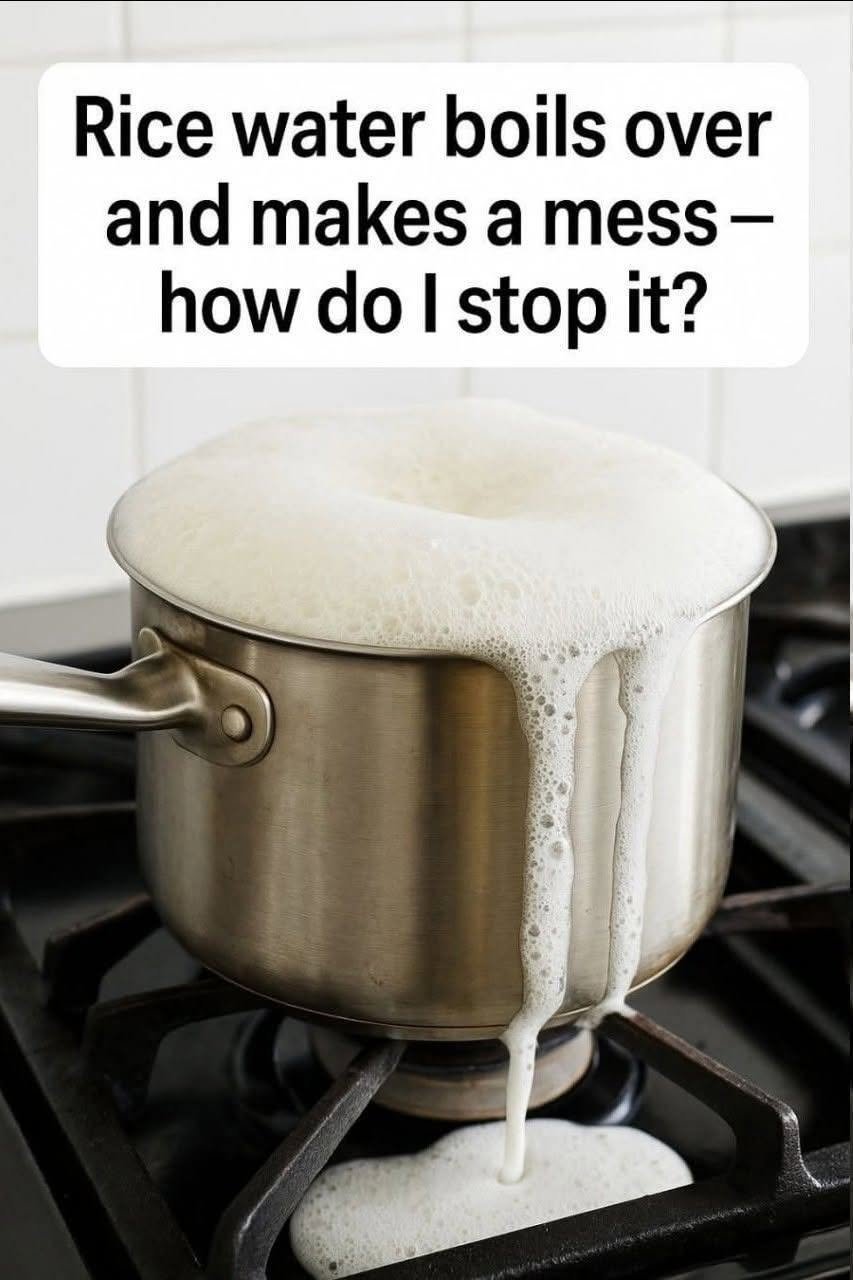
There’s nothing more annoying than cooking a pot of rice, only to turn around and find starchy water bubbling over the sides of the pot.
Suddenly, your stovetop is covered in sticky foam.
The good news? A few simple changes can make a big difference.
Why Does Rice Water Boil Over?
Rice releases starch into the cooking water.
As the water gets hotter, that starch helps create a layer of bubbles and foam. If the pot is too full, the heat is too high, or the lid traps too much steam, the foam can rise quickly and spill over.
1. Use a Larger Pot
This is one of the easiest solutions.
Rice needs room to expand, and the boiling water needs space for foam to rise.
If you’re constantly getting boil-overs, try using a pot that’s noticeably larger than you think you need.
2. Rinse the Rice First
Rinsing rice several times with cool water can remove some of the loose surface starch.
That can reduce foaming during cooking.
Place the rice in a bowl, cover it with water, gently swirl it, drain it, and repeat until the water is considerably less cloudy.
This is especially useful for rice varieties that tend to release a lot of surface starch.
3. Lower the Heat Once It Boils
You don’t need the burner blasting at maximum heat once the water reaches a boil.
As soon as the water begins boiling, reduce the heat to a gentle simmer.
A steady simmer cooks the rice while producing much less aggressive bubbling.
4. Don’t Fill the Pot Too High
Leave plenty of space between the water level and the rim.
Remember that both the water and rice will expand during cooking.
A crowded pot is much more likely to overflow.
5. Be Careful With the Lid
A tightly covered pot can trap steam and allow foam to build up underneath the lid.
If your rice repeatedly boils over, reduce the heat first. Depending on the cooking method, you can also leave the lid slightly ajar during the initial simmering stage.
Once the rice is cooking gently, cover it properly according to the recipe.
6. Use the Right Water-to-Rice Ratio
Too much water means more liquid has to boil away, increasing the opportunity for foaming and overflow.
The ideal ratio depends on the type of rice you’re cooking, so follow the package directions or your trusted recipe rather than using one ratio for every variety.
7. Don’t Walk Away Immediately
The most likely time for a pot to boil over is shortly after it reaches a full boil.
Stay nearby during that stage.
Once you’ve lowered the heat and established a gentle simmer, you can step away with much less worry.
What About Putting a Wooden Spoon Across the Pot?
You’ve probably seen the famous trick of placing a wooden spoon across the top of the pot.
It may temporarily disrupt some bubbles, but it’s not a reliable substitute for lowering the heat and using an appropriately sized pot.
If your rice is constantly overflowing, fix the underlying cause rather than relying on the spoon trick.
The Simple Formula
For fewer rice disasters, remember:
Rinse → use enough space → bring to a boil → lower the heat → simmer gently.
A little attention during the first few minutes can save you from scrubbing a sticky stovetop later.
And once you find the right pot, water ratio, and heat level for your favorite rice, you’ll probably wonder why you ever put up with those boil-overs in the first place.