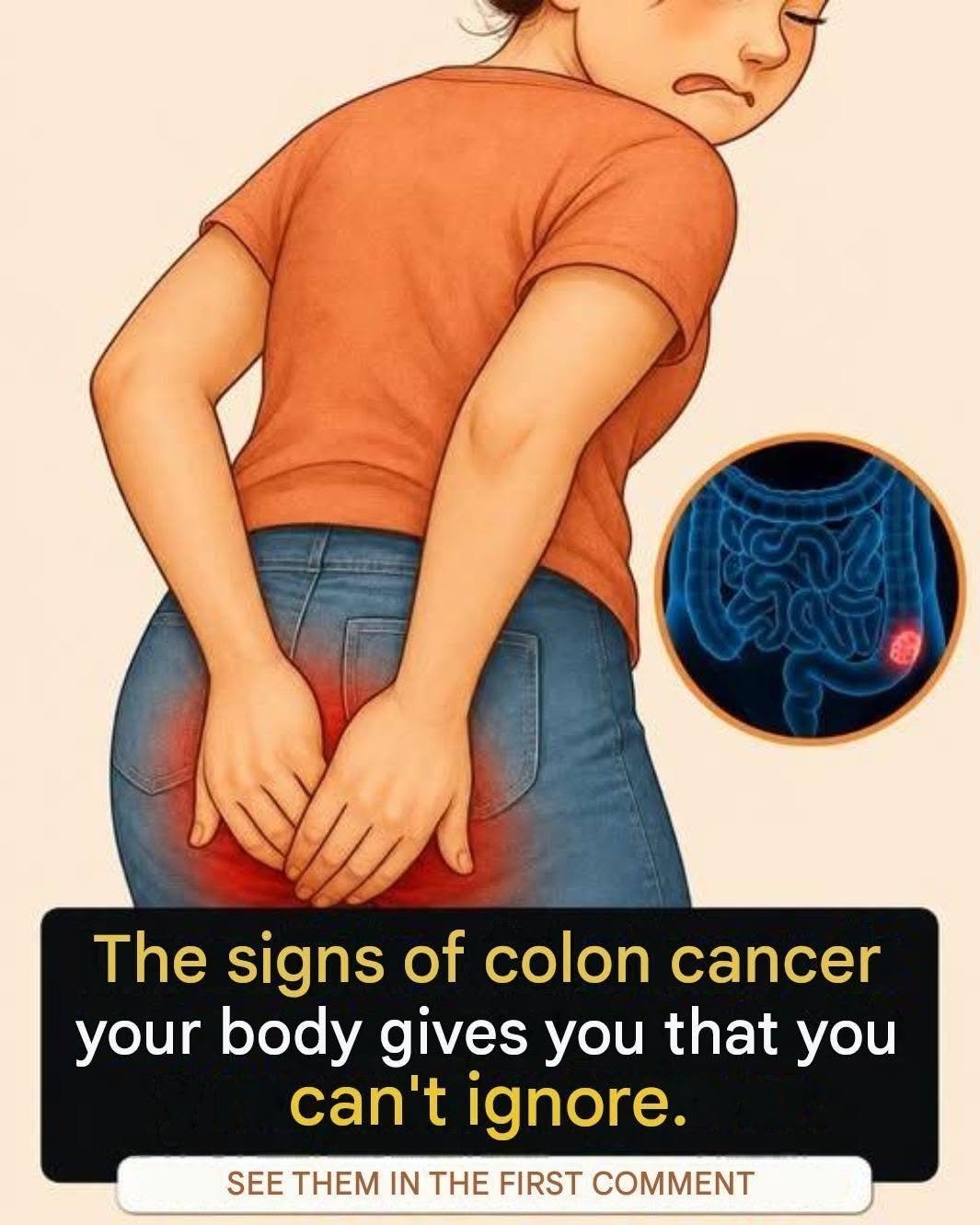
You May Have Colon Cancer If You Notice These Warning Signs
Colon cancer can develop quietly, and some people have no symptoms during its early stages. That is one reason colorectal cancer screening is so important. When symptoms do appear, they can sometimes look like ordinary digestive problems, making them easy to dismiss. (CDC)
Having one of these symptoms does not mean you have cancer. Conditions such as hemorrhoids, infections, irritable bowel syndrome, and inflammatory bowel disease can cause similar problems. But persistent or unexplained changes deserve medical attention.
1. Your Bowel Habits Suddenly Change
A persistent change in how you normally use the bathroom can be an important warning sign.
This may include:
- Constipation that is unusual for you
- Diarrhea that continues
- Alternating between constipation and diarrhea
- Stools becoming noticeably narrower
- A persistent feeling that you haven’t completely emptied your bowel
The CDC and American Cancer Society both list changes in bowel habits among the symptoms that can occur with colorectal cancer. (CDC)
A short-term change is often caused by diet, infection, medications, or other common conditions. The concern increases when the change persists or keeps returning without an obvious explanation.
2. You Notice Blood in Your Stool
Blood in or on the stool should not simply be ignored.
Depending on where bleeding occurs, blood may appear bright red, or it may make the stool look very dark or black. Colorectal cancers can bleed into the digestive tract, and sometimes the bleeding is not visible at all. (Cancer.org)
There are many non-cancerous explanations for rectal bleeding, including hemorrhoids. Nevertheless, unexplained or recurrent bleeding should be discussed with a healthcare professional.
3. You Have Persistent Abdominal Pain or Cramping
Occasional stomach discomfort is common. Persistent abdominal pain, aches, or cramping, particularly when accompanied by other bowel changes, should receive attention.
The CDC specifically lists abdominal pain, aches, and cramps that don’t go away among possible colorectal cancer symptoms. (CDC)
This symptom alone is not enough to identify the cause. Digestive infections, food intolerances, inflammatory conditions, and many other problems can produce similar discomfort.
4. You’re Losing Weight Without Trying
Unexplained weight loss can have many causes, but significant weight loss without intentionally changing your diet or activity level is something worth discussing with a doctor.
Unintentional weight loss is recognized as a possible symptom of colorectal cancer. (CDC)
If weight loss occurs together with persistent bowel changes, abdominal symptoms, or blood in the stool, medical evaluation becomes particularly important.
5. You’re More Tired or Weak Than Usual
Colon cancer can sometimes cause bleeding that isn’t visible in the stool. Over time, blood loss can contribute to anemia, which may result in weakness and fatigue. (Cancer.org)
Unexplained tiredness has many possible causes—including poor sleep, nutritional deficiencies, infections, medications, and other medical conditions—so fatigue doesn’t automatically indicate cancer.
But persistent fatigue combined with digestive symptoms shouldn’t be brushed aside.
6. You Feel an Ongoing Urge to Have a Bowel Movement
Another possible warning sign is feeling as though you need to have a bowel movement even after you’ve already gone.
This sensation of incomplete emptying can occur with colorectal cancer, although it can also have other causes. (Cancer.org)
If this feeling continues or is accompanied by bleeding, pain, or a significant change in bowel habits, talk with a healthcare professional.
Colon Cancer Doesn’t Always Cause Symptoms
Perhaps the most important point is that you can have colorectal cancer or precancerous polyps without obvious symptoms.
According to the CDC, polyps and colorectal cancer may cause no symptoms, particularly in the early stages. Screening can detect abnormal growths before they cause noticeable problems, and some polyps can be removed before they become cancerous. (CDC)
That’s why waiting for symptoms isn’t a substitute for appropriate screening.
When Should You Get Checked?
If you notice persistent changes in bowel habits, blood in your stool, unexplained weight loss, ongoing abdominal discomfort, unusual fatigue, or a persistent sensation of incomplete bowel movements, arrange an evaluation with a healthcare professional.
Don’t assume that a symptom is cancer—but don’t assume it’s harmless either.
A medical evaluation may involve discussing your symptoms and family history, physical examination, blood tests, stool tests, or other investigations depending on your circumstances.
Screening Can Find Problems Before Symptoms Appear
For average-risk adults in the United States, the CDC recommends regular colorectal cancer screening beginning at age 45 and continuing through age 75. People with increased risk—such as those with certain family histories or medical conditions—may need to begin earlier or be screened differently. (CDC)
Screening isn’t simply about finding cancer. It can also identify precancerous polyps so they can be removed before they develop into cancer.
The Bottom Line
You may have colon cancer if you experience warning signs such as persistent bowel changes, blood in the stool, ongoing abdominal pain, unexplained weight loss, unusual weakness or fatigue, or a persistent feeling that your bowel hasn’t emptied completely.
But none of these symptoms proves that you have cancer. Many common conditions can cause the same symptoms.
The important message is simple: don’t ignore persistent or unexplained changes in your digestive health. Early evaluation and appropriate screening can make a major difference in detecting colorectal cancer at an earlier, more treatable stage. (CDC)
This article is for general educational purposes and is not a diagnosis or a substitute for medical advice. If you have concerning or persistent symptoms, speak with a qualified healthcare professional.