What Really Happens During a Solar Eclipse—and What You Should Never Do
Millions of people gather to watch a solar eclipse, but seeing one in person can be surprisingly different from what you expect.
The sky changes.
The temperature can drop.
Shadows become strange.
And for a few brief moments, daytime can feel almost like night.
But there’s one thing you should take especially seriously before looking up: your eyes.
Why does the sky suddenly change?
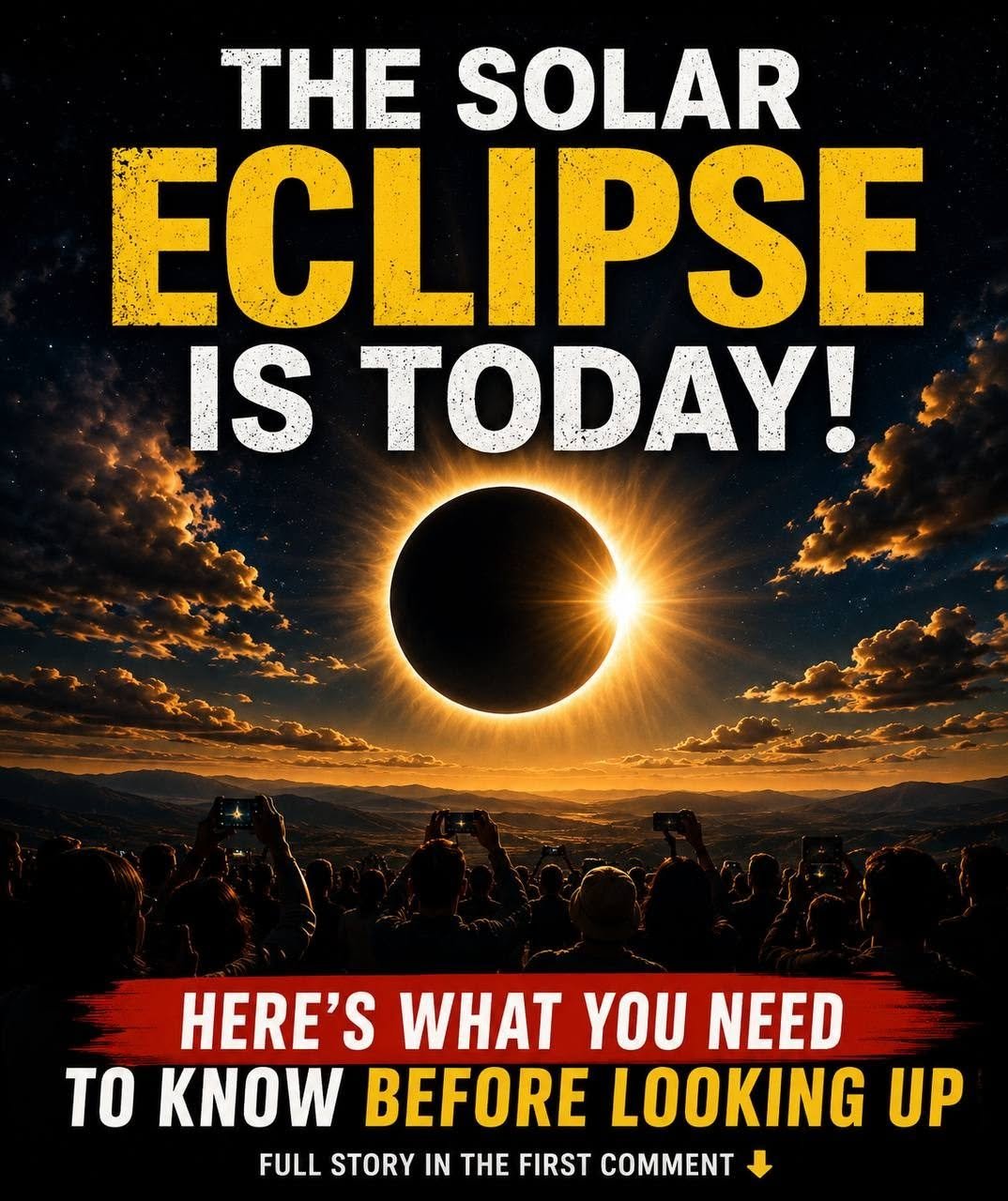
During a total solar eclipse, the Moon passes directly between Earth and the Sun and temporarily blocks the Sun’s bright disk.
As totality approaches, daylight can fade rapidly.
The horizon may take on unusual colors while the area directly beneath the eclipse becomes dramatically darker. Stars and planets can become visible, depending on the duration of totality and local conditions.
The change can feel much faster and stranger than photographs suggest.
You’re watching daylight disappear in real time.
What happens to the temperature?
The temperature can fall during an eclipse because part of the Sun’s incoming energy is temporarily blocked.
How much it changes depends on factors such as the location, season, cloud cover, wind, and the type and duration of the eclipse.
During a total eclipse, the cooling can be particularly noticeable.
You may also notice changes in the wind and local environment as the landscape suddenly becomes cooler and darker.
Animals can react, too.
Birds may become quieter or return to their nighttime roosts, while some insects can begin making their evening sounds.
For a few minutes, nature may behave as though night has arrived early.
Why do the shadows look so strange?
One of the most fascinating effects occurs shortly before and after totality.
Instead of ordinary shadows, you may see thin, rapidly moving bands of light and darkness across the ground.
These are called shadow bands.
They are caused by the atmosphere and the extremely narrow crescent of sunlight remaining visible around the Moon.
If you have the opportunity to watch an eclipse safely, pay attention to the ground as well as the sky.
Some of the most unusual effects are happening beneath your feet.
The most important rule: protect your eyes
This is the part you should never ignore.
Do not look directly at the Sun through ordinary sunglasses.
Regular sunglasses do not provide the protection needed for direct solar viewing.
Looking at the Sun without appropriate protection can cause serious retinal injury, and you may not immediately feel pain because the retina does not have pain receptors.
For the partial phases of a solar eclipse, use properly certified solar-viewing glasses or viewers designed specifically for direct observation of the Sun.
NASA recommends using solar viewers that meet the appropriate international safety standard, and it warns against using homemade filters or ordinary sunglasses.
What about totality?
There is an important exception.
During totality—the brief period when the Moon completely covers the bright solar surface during a total solar eclipse—it is safe to look at the Sun without eclipse glasses.
But this applies only during totality.
The instant the bright solar surface begins to reappear, you must put the eclipse glasses back on.
This distinction is critical because the partial phases surrounding totality are not safe to view directly without proper eye protection.
What if you don’t have eclipse glasses?
Don’t improvise.
You can safely experience an eclipse indirectly using a simple pinhole projection method or another appropriate projection device.
The basic idea is to project an image of the Sun onto a surface rather than looking directly at it.
Never use binoculars, telescopes, or cameras to look at the Sun unless they have the correct solar filters specifically designed for the equipment and properly installed.
An eclipse is more than a dark sky
A solar eclipse is one of those rare events where astronomy becomes something you can physically experience.
You can feel the temperature change.
You can watch daylight disappear.
You can notice unusual shadows.
You may hear animals responding to the sudden darkness.
And then, almost as quickly as it arrived, sunlight returns.
The experience can last only minutes, but the memory can last a lifetime.
So if you’re preparing to watch a solar eclipse, remember the most important rule:
Look up—but look safely.
Use proper solar protection during the partial phases, never rely on ordinary sunglasses, and if you’re fortunate enough to experience totality, know exactly when it begins and ends.
The eclipse itself is spectacular.
There’s no reason to risk your eyesight to see it.