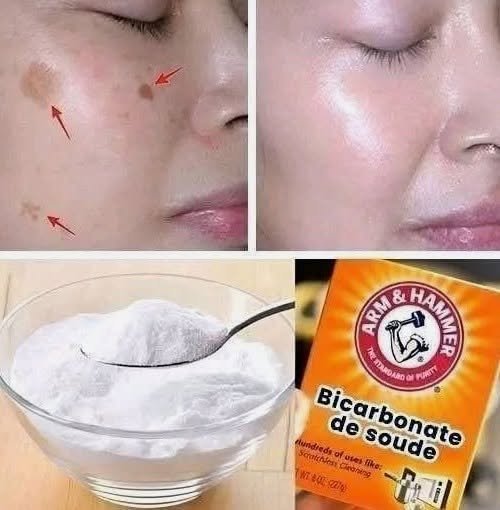
Baking Soda for Dark Spots, Wrinkles, and Dark Circles: What Actually Works
Baking soda is often promoted online as a cheap, natural beauty treatment for dark spots, wrinkles, and dark circles.
But before putting it on your face, there’s an important fact to know:
Baking soda is not a proven treatment for these concerns, and it can irritate facial skin.
Your skin has a naturally acidic protective barrier. Baking soda is alkaline, and applying it repeatedly can disrupt that barrier, causing dryness, irritation, redness, and sensitivity.
So instead of following a viral recipe that mixes baking soda with lemon juice, toothpaste, or other harsh ingredients, it’s safer to choose treatments designed specifically for facial skin.
Can baking soda remove dark spots?
Not reliably.
Dark spots can have many causes, including sun exposure, inflammation after acne or injury, hormonal changes, and certain medications.
The key to improving pigmentation is identifying the cause and preventing additional pigment from forming.
One of the most important steps is daily sun protection. The American Academy of Dermatology recommends broad-spectrum, water-resistant sunscreen with an SPF of 30 or higher.
For persistent pigmentation, dermatologists may recommend ingredients such as vitamin C, retinoids, azelaic acid, or hydroquinone depending on the individual situation.
What about wrinkles?
Baking soda cannot reverse wrinkles.
Wrinkles develop as skin changes with age and cumulative sun exposure. While no home ingredient can permanently stop aging, proven skincare approaches can improve the appearance of fine lines.
Retinoids are among the better-studied topical options for photoaging. Daily sun protection is also essential because ultraviolet exposure contributes substantially to premature skin aging.
Instead of scrubbing your face with baking soda, use a gentle cleanser, moisturizer, and sunscreen consistently.
Can it get rid of dark circles?
Dark circles are particularly tricky because “dark circles” can have several different causes.
They may be related to genetics, pigmentation, visible blood vessels, shadows from facial anatomy, allergies, lack of sleep, or thinning skin.
That means there isn’t one universal treatment.
Baking soda won’t correct the underlying causes, and irritating the delicate skin around your eyes can make the area look worse.
Never put baking soda directly into your eyes or use it as an eye-area scrub.
Why do baking-soda recipes sometimes seem to work?
Some people notice temporarily smoother-looking skin after using a homemade scrub.
That’s because removing surface flakes can make the skin feel different for a short time.
But “feels smoother” isn’t the same as treating pigmentation or wrinkles.
Repeated physical or chemical irritation can actually trigger inflammation and potentially worsen pigmentation, particularly in people prone to post-inflammatory hyperpigmentation.
A safer routine for brighter-looking skin
Instead of a baking-soda mask, try a simple routine.
Morning
1. Gentle cleanser
Avoid harsh scrubbing.
2. Moisturizer
Choose one appropriate for your skin type.
3. Sunscreen
Use broad-spectrum SPF 30 or higher and reapply as appropriate, especially when outdoors.
Evening
1. Cleanse gently.
2. Use one evidence-based active ingredient.
Depending on your concern and skin sensitivity, options may include a retinoid, azelaic acid, or vitamin C.
3. Moisturize.
Start new products gradually and stop if you develop significant irritation.
What about lemon and baking soda?
This combination is especially popular in homemade beauty recipes.
It’s also a combination worth avoiding.
Lemon juice can irritate skin, and exposure to sunlight after certain citrus exposures can cause a reaction known as phytophotodermatitis.
Adding baking soda doesn’t turn lemon juice into a safe facial treatment.
When should you see a dermatologist?
See a dermatologist if a dark spot is new, changing, bleeding, itching, or otherwise unusual.
You should also consider professional advice if pigmentation doesn’t improve or if you’re unsure what is causing it.
A dermatologist can determine whether you’re dealing with ordinary hyperpigmentation, melasma, post-inflammatory changes, or something that needs further evaluation.
The bottom line
Baking soda may be inexpensive and useful around the home, but your face isn’t a kitchen experiment.
There is no reliable baking-soda recipe that can safely erase dark spots, wrinkles, and dark circles.
For healthier-looking skin, the basics are much less dramatic but far more dependable:
Gentle skincare. Moisturization. Evidence-based ingredients. And daily sun protection.
If you’ve been using baking soda on your face and develop burning, redness, swelling, or persistent irritation, stop using it and seek medical advice if the symptoms are severe or don’t improve.