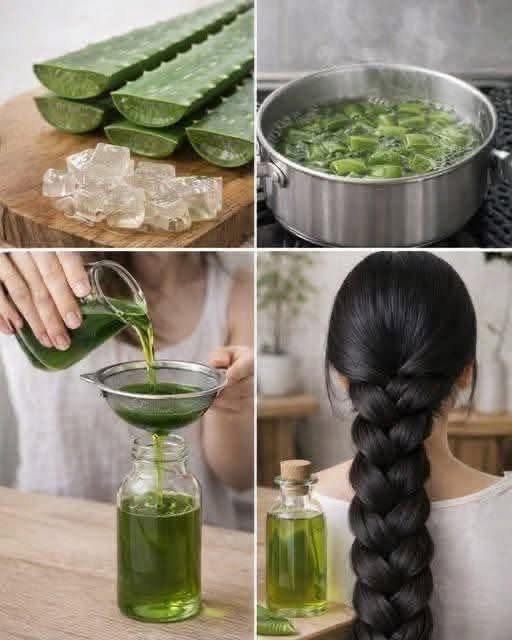
- 2–3 tablespoons fresh aloe vera gel
- ½ cup coconut oil or olive oil
- 1 tablespoon castor oil — optional
- 1 small clean, dry glass jar
- A fine strainer or clean cheesecloth
Step 1: Prepare the aloe vera
Cut a fresh aloe vera leaf from the plant.
Wash it thoroughly and place it upright for about 10–15 minutes so the yellow latex/sap drains out. This yellow material can irritate the skin.
Then:
- Cut away the edges.
- Remove the outer green skin.
- Scoop out the clear inner gel.
- Rinse the gel several times.
- Blend it until smooth.
Important: Don’t put unwashed aloe latex into the oil because it can cause irritation.
Step 2: Make the infused oil
Add ½ cup coconut or olive oil to a small saucepan.
Add 2–3 tablespoons aloe vera gel.
Heat over very low heat for about 10–15 minutes, stirring frequently.
You don’t want to fry or burn the aloe. The mixture should gently warm and gradually become less watery.
Turn off the heat and allow it to cool completely.
Step 3: Strain it
Pour the mixture through a clean fine strainer or cheesecloth.
Squeeze out as much oil as possible and discard the remaining aloe residue.
Transfer the oil to a clean, completely dry glass bottle or jar.
Step 4: Optional castor oil
Once the aloe-infused oil has completely cooled, you can mix in:
1 tablespoon castor oil
Castor oil is thick and can make the mixture heavier, so don’t use too much.
How to Use Aloe Vera Oil for Hair
For scalp treatment
- Divide your hair into sections.
- Apply a small amount directly to the scalp.
- Massage gently with your fingertips for 5 minutes.
- Leave it on for 30–60 minutes.
- Wash with a gentle shampoo.
You can do this 2–3 times per week if your scalp tolerates it.
You don’t need to soak your entire scalp in oil. A small amount is enough.
For dry hair
After shampooing, you can put 2–4 drops of the oil on your palms and rub them together.
Apply mainly to the mid-lengths and ends.
This can help reduce dryness and breakage, making hair appear fuller and healthier.
Can Aloe Vera Actually Stop Hair Loss?
This is where it’s important to separate hair care from hair-loss treatment.
Aloe vera can provide moisture and may soothe an irritated or dry scalp. It can also make hair feel softer and reduce some breakage.
However, there isn’t good clinical evidence that homemade aloe vera oil can stop genetic hair loss or reliably stimulate new hair growth.
If you’re losing a lot of hair, the cause matters.
For example, hair loss can occur because of:
- Iron deficiency
- Thyroid problems
- Hormonal changes
- Pregnancy or postpartum changes
- Significant stress
- Rapid weight loss
- Certain medications
- Nutritional deficiencies
- Scalp inflammation
- Dandruff/seborrheic dermatitis
- Pattern hair loss
If you’re seeing bald patches, a widening part, a rapidly receding hairline, or substantial shedding for several months, it’s better to see a dermatologist rather than relying only on oil.
⚠️ One important safety tip
Before applying homemade aloe oil all over your scalp, put a small amount behind your ear or on your inner arm and wait 24 hours. If you develop burning, itching, redness, swelling, or a rash, don’t use it.
Also, because fresh aloe contains water, homemade aloe-oil mixtures can spoil more quickly than commercial oils. Make a small batch, keep it refrigerated, use clean utensils, and discard it if it develops an unusual smell, appearance, or mold. Don’t add water to extend the recipe.
Best realistic approach: use aloe oil as a scalp/hair-conditioning treatment, but if your goal is specifically to stop significant hair loss and regrow thinning areas, identify the cause and use a treatment with evidence for that particular type of hair loss.