Colin Farrell’s Son Taught Him That the Greatest Victories Can Be the Smallest Ones
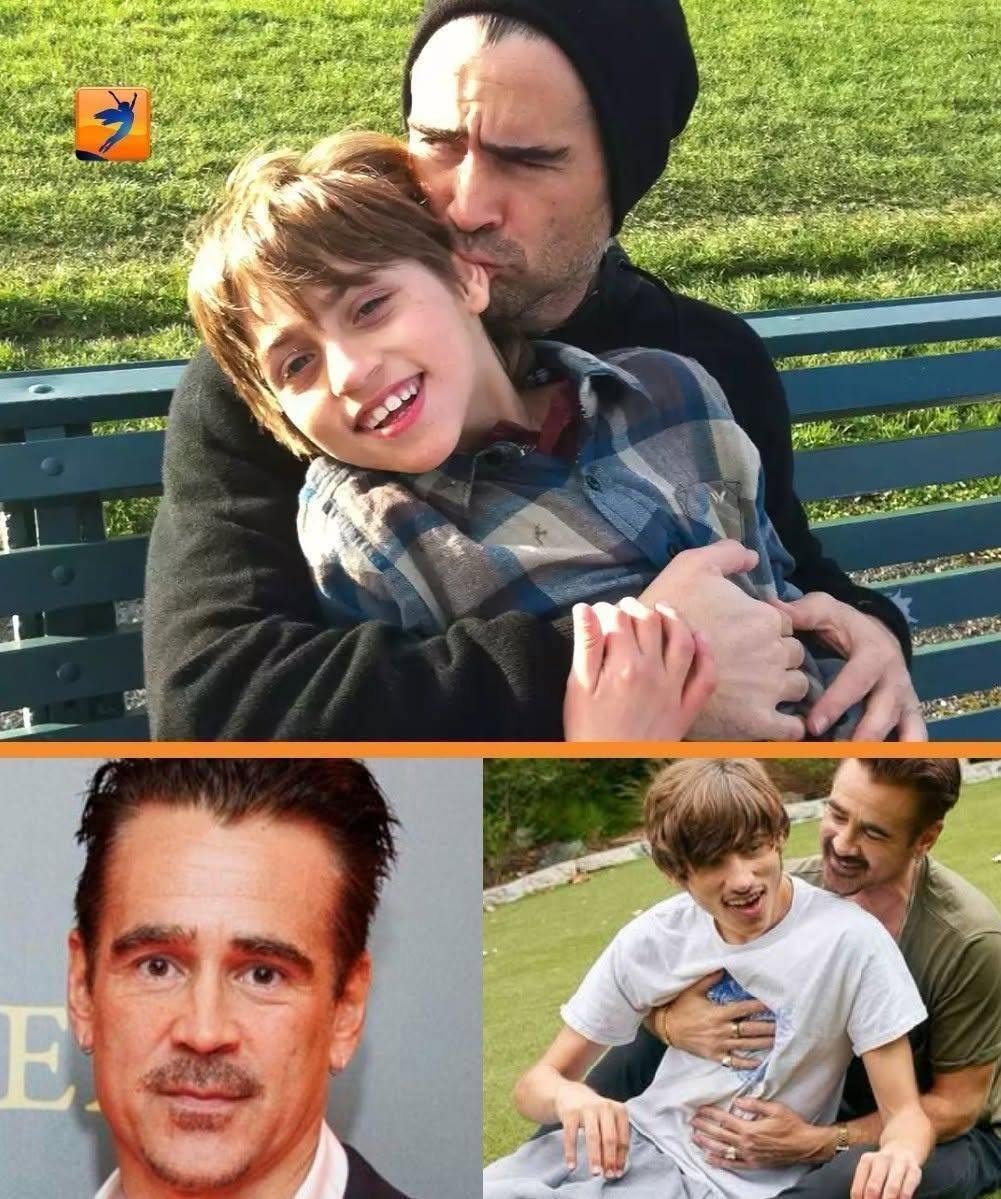
When Colin Farrell became a father in 2003, he had no idea how profoundly his first son, James, would change his life.
James was born on September 12, 2003. Farrell later recalled that his newborn son was unusually quiet—so quiet that he initially joked that he’d been lucky enough to have a baby who wouldn’t keep him awake at night. But as James grew, it became clear that he was developing differently from other children. (The Straits Times)
At 2½, after an earlier misdiagnosis of cerebral palsy, James was diagnosed with Angelman syndrome, a rare neurogenetic condition associated with significant developmental and intellectual disabilities, limited or absent speech, movement and balance difficulties, and seizures. (The Straits Times)
For Farrell, the diagnosis changed his understanding of what mattered.
The actor had become famous for his wild Hollywood image and struggles with alcohol and drugs. But fatherhood gave him a reason to look at his own life differently. He later said that James “saved my life,” describing how becoming responsible for his son helped him learn to care for someone else when he wasn’t yet able to properly care for himself. (Irish Independent)
Then came a moment Farrell would never forget.
Six Steps That Meant Everything
James had spent four years working toward something many parents might take completely for granted: walking.
Doctors had warned that he might never walk.
Then, just two weeks before his fourth birthday, James took his first steps.
Farrell recalled standing several feet away while James’s mother let him go. James walked toward his father—taking roughly six steps.
Farrell burst into tears.
“It was so profound,” he later recalled. “It was magic.” (CNN Transcripts)
For most parents, a child’s first steps are an unforgettable milestone.
For Farrell and his family, those six steps represented four years of determination, therapy, setbacks and hope.
And they changed the way he viewed success.
Years later, Farrell explained that the family celebrated the smallest victories: James learning to speak, feed himself, remove his socks, get his own yogurt, and gain greater independence. (ABC News)
“My Greatest Successes”
As James grew older, Farrell became increasingly open about his son’s journey.
He didn’t want James reduced to a diagnosis.
Instead, he spoke about his courage, individuality and determination.
“My greatest successes are watching him achieve his greatest successes,” Farrell said in 2013. (RTE)
That perspective also helped Farrell become more vocal about the challenges facing families raising children with intellectual and developmental disabilities.
And in 2024, he took that commitment a step further.
A Foundation Inspired by James
As James approached 21, Farrell began thinking about what would happen when his son reached adulthood.
He had seen how dramatically support systems can change when young people with intellectual disabilities age out of school-based services.
So Farrell launched the Colin Farrell Foundation, dedicated to supporting adults with intellectual disabilities and their families through advocacy, education and innovative programs. (People.com)
Explaining his motivation, Farrell pointed to the gap that many families face after their children reach adulthood.
“Once your child turns 21, they’re kind of on their own,” he said, describing how many safeguards and educational supports disappear. (People.com)
His concern wasn’t simply about James.
It was about thousands of families who suddenly find themselves navigating adulthood with far fewer resources than they had during childhood.
Farrell also spoke about a deeply personal fear: what would happen to James when he was no longer around to advocate for him.
The foundation became one way of turning that fear into action.
A Different Definition of Strength
Colin Farrell’s story isn’t really about a Hollywood star becoming a different person because he had a child with a disability.
It’s about a father learning to recognize forms of courage that don’t make headlines.
Sometimes courage is taking six steps after years of being told walking might never happen.
Sometimes it’s learning to communicate without words.
Sometimes it’s a parent celebrating a milestone that other people might not even notice.
And sometimes it’s using your own platform to make sure that children like James don’t disappear from public attention when they become adults.
Farrell has often spoken about how much James has given him.
The lesson seems remarkably simple:
Life isn’t measured only by the milestones that come easily.
Sometimes the victories that require the most work are the ones that mean the most.
And sometimes, the person you think you’re teaching to be brave is actually the person teaching you what courage looks like.