If You Always Sleep on Your Right Side, You Should Know This
Sleeping on your right side is a normal and comfortable position for millions of people. It does not mean something is wrong with you. However, your sleeping position can influence certain symptoms—especially acid reflux.
1. You May Notice More Acid Reflux
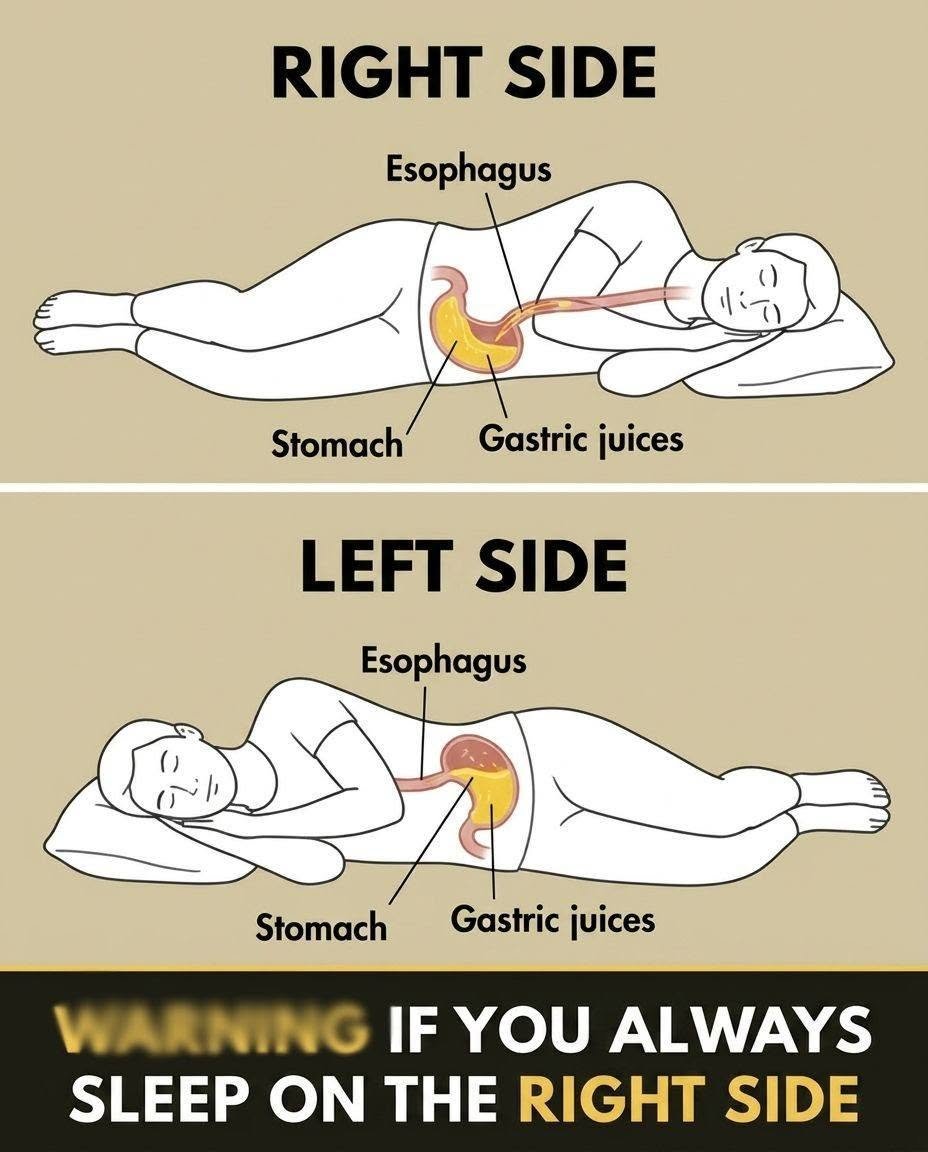
For people who experience nighttime heartburn or GERD, sleeping on the right side can make reflux more likely. Research has found that lying on the right side is associated with greater nighttime acid exposure than lying on the left side. (PubMed Central (PMC))
Why?
Because of the way the stomach and esophagus are positioned, lying on the left side generally makes it harder for stomach contents to flow back into the esophagus.
2. The Left Side May Be Better for Heartburn
If you regularly wake up with:
- Burning in your chest
- A sour or bitter taste
- Regurgitation
- Coughing or throat irritation at night
try starting the night on your left side.
Mayo Clinic also recommends starting on the left side as one lifestyle measure that may reduce nighttime reflux. (Mayo Clinic)
3. You Don’t Need to Force Yourself to Sleep Left-Sided
If you sleep comfortably on your right side and don’t have reflux or another condition affected by sleep position, there is no general medical rule saying you must switch sides.
Your comfort, sleep quality, and ability to breathe comfortably matter too.
4. What About Your Heart?
You may have seen claims online that sleeping on the right side is dangerous for your heart.
Those claims are far too broad.
For most healthy adults, routinely sleeping on the right side isn’t considered dangerous simply because it’s the right side. Sleep position can affect certain medical conditions, but a preferred sleeping side by itself isn’t a diagnosis.
5. What About Pregnancy?
Pregnant women are often advised to pay attention to sleep position, particularly later in pregnancy. However, evidence does not support the idea that right-side sleeping is inherently dangerous during pregnancy. An NIH-funded study found no increased risk of adverse outcomes from right-side sleeping through 30 weeks, while other guidance emphasizes avoiding going to sleep flat on the back after 28 weeks. (NICHD)
Pregnant people should follow their own clinician’s advice, especially if they have complications.
6. Your Pillow and Mattress Matter Too
Side sleeping can put pressure on the shoulder, neck, and hips if your body isn’t well supported.
A pillow that keeps your head and neck relatively aligned with your spine—and a mattress that provides appropriate support—may make side sleeping more comfortable.
7. Try This Simple Experiment Tonight
If you regularly suffer from nighttime heartburn, don’t panic about sleeping on your right side.
Instead:
Start on your left side → avoid lying down immediately after eating → consider elevating the head of the bed if symptoms persist.
Mayo Clinic recommends waiting at least three hours after eating before going to bed for people with reflux symptoms. (Mayo Clinic)
The Bottom Line
Sleeping on your right side isn’t automatically unhealthy.
The biggest well-established concern is that right-side sleeping can worsen nighttime reflux in people who are prone to GERD. If that’s you, experimenting with left-side sleeping may make a noticeable difference. (PubMed Central (PMC))
And don’t believe viral posts claiming that your preferred sleeping position can diagnose a hidden disease. Your sleeping position alone is not a reliable way to determine your health.
This article is for general education and isn’t a substitute for personalized medical advice.