Very Dirty Mop? Don’t Throw It Away—Here’s How to Clean It Properly
A mop is supposed to make your floors cleaner.
But after weeks of picking up dust, grease, spills, and grime, the mop head itself can become one of the dirtiest cleaning tools in the house.
That doesn’t necessarily mean you need to throw it away.
With the right cleaning routine, many reusable mop heads can be refreshed and made ready for their next use.
The “secret ingredient” isn’t a miracle cleaner
You may have seen recipes recommending a few drops of bleach, vinegar, baking soda, or another household ingredient.
The safest approach is simpler:
Start with detergent and water.
The CDC explains that cleaning with soap or detergent and water removes dirt and many germs. Disinfection is a separate step and isn’t necessary for every household cleaning job. (CDC)
So don’t immediately reach for a strong disinfectant.
First, get the dirt out.
Step 1: Remove loose dirt
Take the mop head outside or over a suitable utility area and rinse away loose debris.
Wear gloves if the mop is heavily soiled.
Don’t shake a filthy mop around indoors—you don’t want dried dirt and contaminants becoming airborne or spreading to other surfaces.
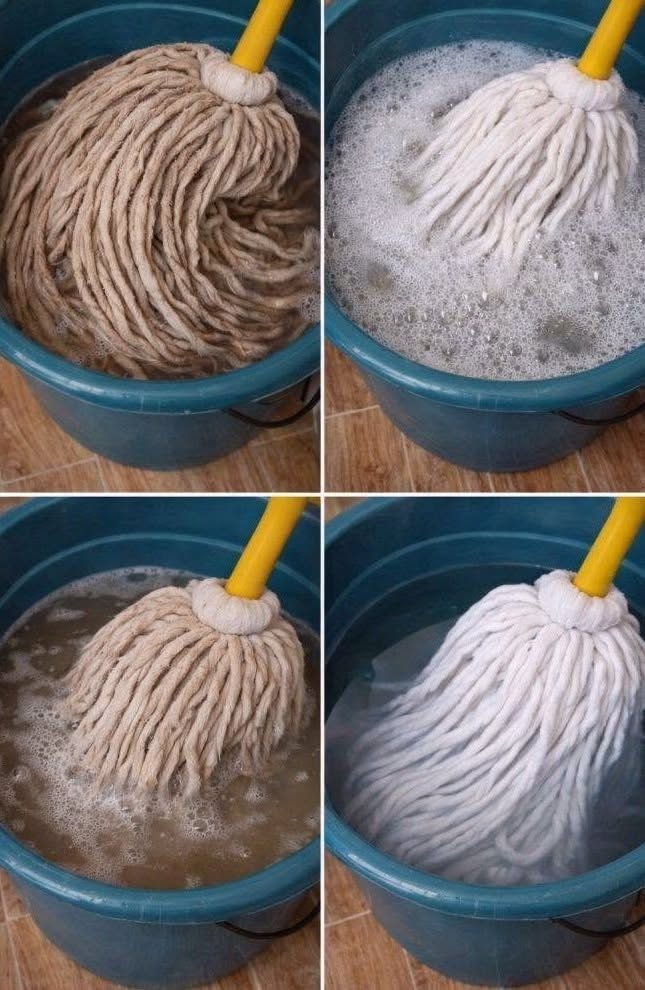
Step 2: Wash it with detergent
Place a washable mop head in warm water with an appropriate amount of laundry detergent or another cleaner recommended by the manufacturer.
Work the detergent through the fibers thoroughly.
For stubborn grime, allow it to soak before rinsing.
The CDC recommends mechanically removing soil with detergent and scrubbing before attempting disinfection. (CDC)
Step 3: Rinse thoroughly
Rinse until the water runs clear and there is no obvious detergent or dirt remaining.
This step matters because disinfectants work less effectively when dirt and organic material are still present.
Step 4: Disinfect only when appropriate
If the mop was used to clean an area contaminated with bodily fluids, or if someone in your household is sick and you specifically need disinfection, follow the manufacturer’s instructions and use an appropriate disinfectant.
If using bleach, never mix it with vinegar, ammonia, or other cleaning products.
The CDC specifically warns that mixing bleach with other cleaners can release dangerous vapors. (CDC)
Also check the mop manufacturer’s instructions first. Some microfiber materials can be damaged by chlorine-based products, so bleach isn’t automatically appropriate for every mop. (CDC)
Step 5: Dry it completely
This is one of the most important—and most frequently forgotten—steps.
A wet mop left in a bucket or damp corner can become a breeding ground for microorganisms and develop an unpleasant odor.
After washing, squeeze out excess water and allow the mop head to dry completely in a clean, well-ventilated place.
The CDC recommends laundering reusable mop heads regularly and allowing them to fully dry before storage and reuse. (CDC)
What about baking soda?
Baking soda can help with odors and light cleaning, but there’s no need to treat it as a magical ingredient that will restore every stained mop head.
For ordinary cleaning, detergent, thorough rinsing, and complete drying are more important.
And if you’re thinking about combining baking soda with bleach or other cleaners, don’t experiment with chemical mixtures.
Different cleaning products can react unpredictably.
Don’t use a dirty mop to clean your floors
There’s an easy mistake many people make: they rinse a dirty mop briefly, squeeze it out, and immediately continue cleaning.
That can simply spread contaminated water and grime around the house.
A cleaning tool should itself be cleaned regularly.
The CDC notes that reusable cleaning equipment can become contaminated during use and recommends regular reprocessing and thorough drying. (CDC)
When should you replace the mop?
Sometimes a mop really has reached the end of its useful life.
Replace the head if:
- The fibers are badly worn or falling apart.
- It remains foul-smelling after proper washing and drying.
- It can no longer absorb or clean effectively.
- It has been contaminated in a way that cannot be safely cleaned.
- The manufacturer says it isn’t designed to be washed or reused.
The simple formula
For most reusable mop heads, remember:
Rinse → wash with detergent → rinse thoroughly → disinfect when actually needed → dry completely.
You don’t need an exotic household “secret.”
A properly washed and completely dried mop is far more useful than one that merely looks clean after a quick rinse.
And the next time you finish mopping, don’t leave the mop sitting in dirty water.
Clean the cleaner—and let it dry completely before putting it away.