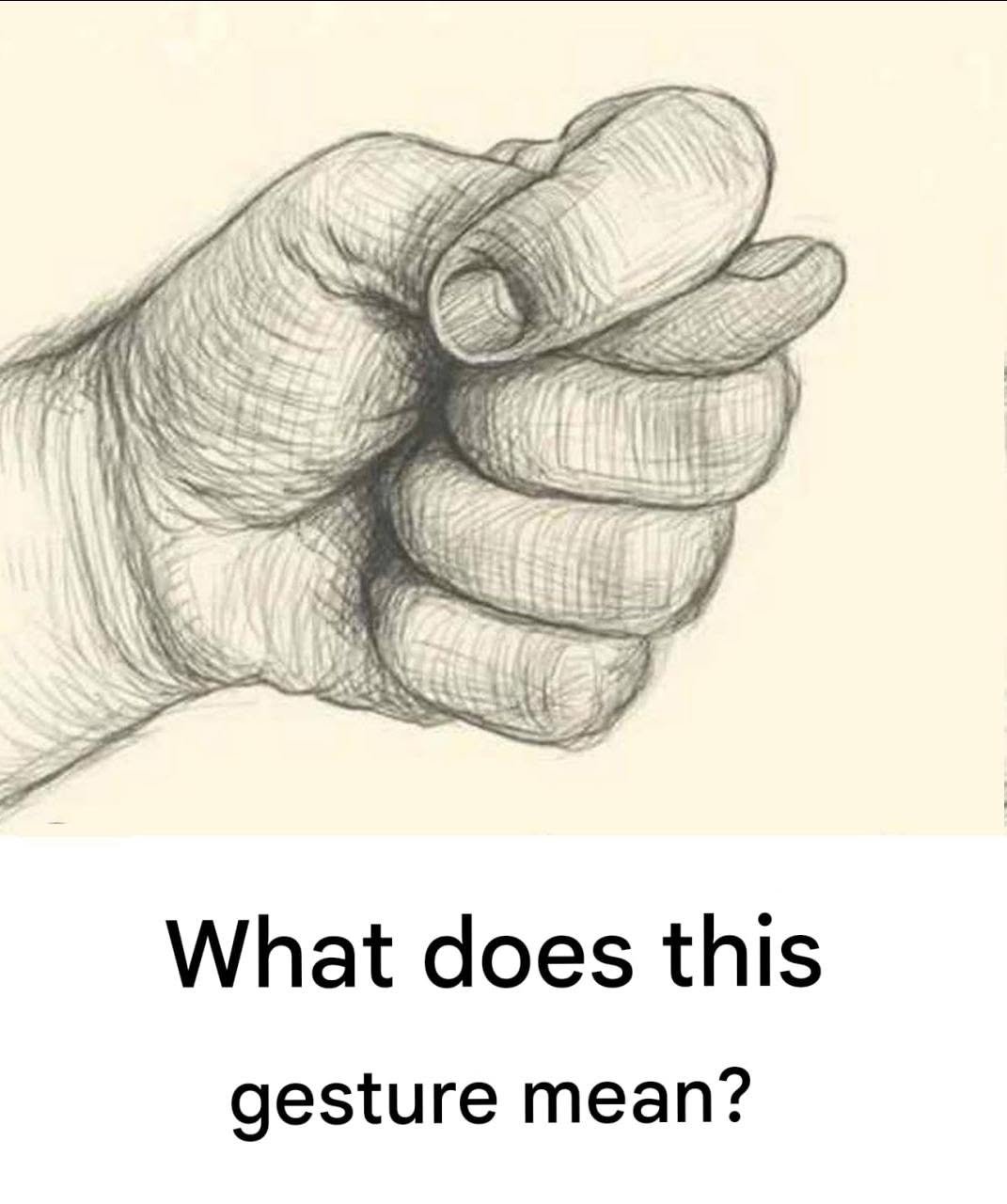
What Does the Thumb-Trapped-Between-the-Fingers Gesture Mean?
Have you ever seen someone make a fist with their thumb tucked between their fingers and wondered what it means?
This simple hand gesture can carry different meanings depending on the country, culture, and situation.
The “Fig” Gesture
When the thumb is placed between the index and middle fingers, the gesture is commonly known as the fig sign or fig hand.
Historically, it has had several interpretations. In some cultures, it was associated with good luck, protection, or warding off bad fortune. People have sometimes used it much like crossing their fingers.
However, in other cultures and contexts, the same gesture can be rude or insulting, with an obscene meaning.
Why Does the Meaning Change?
Hand gestures aren’t universal languages.
A gesture that means “good luck” in one place can mean something completely different somewhere else. The fig sign has particularly varied meanings across different cultures and historical periods.
Its meaning can also depend on the person’s expression and the situation. A child making the gesture while playing may have no offensive intention at all, while an adult deliberately directing it at someone could be using it as an insult.
Don’t Confuse It With a Different Gesture
The position of the fingers matters.
The thumb trapped between the fingers is generally called the fig sign.
The thumb held between crossed fingers, meanwhile, is often associated with wishing for luck or hoping that something happens.
Small differences in hand position can therefore completely change the interpretation.
So, What Does It Mean?
There isn’t one universal answer.
Most commonly, the thumb-between-the-fingers gesture is recognized as the fig sign, whose meanings have included luck, protection, fertility symbolism, or an insult, depending on the cultural context.
So if you see someone making it, look at where they are, who they’re communicating with, and what is happening around them before assuming what they mean.
A tiny movement of the hand can carry centuries of cultural history—and sometimes, quite different messages.